

Quick answer: why ceilings leak
Your ceiling leaks because water from above has found a path through a failed barrier. That barrier could be the waterproofing membrane in a bathroom upstairs, the sealant around a floor trap, a roof or concrete slab, or the joint where a pipe passes through structure. Once the barrier fails, water tracks along the slab and drips through the weakest point in your ceiling. Fix the barrier and the source, and the leak stops.
The hard part is finding which source is at fault. Singapore homes stack wet areas, pipes, and external features close together, so a drip in your living room could start in a neighbour’s toilet, your own balcony, or a pipe behind the false ceiling. Guessing rarely works, which is why a proper inspection matters.
Common signs of a ceiling leak
A ceiling leak shows itself long before water drips. Catch these early and the repair stays small.
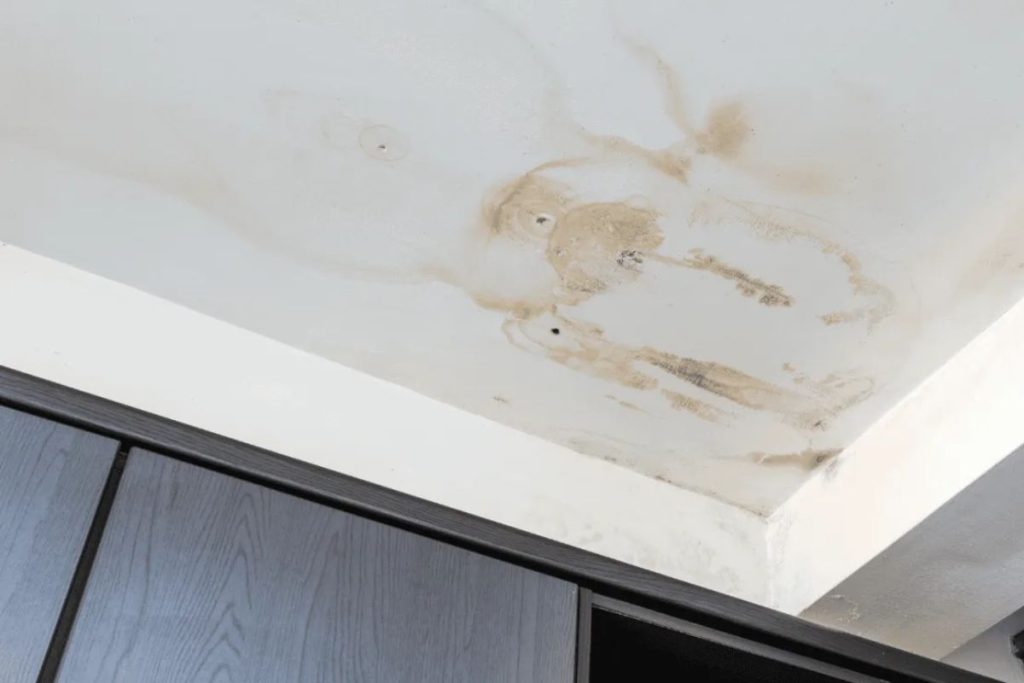
- Brown or yellow ceiling water stain, often with a darker ring at the edge.
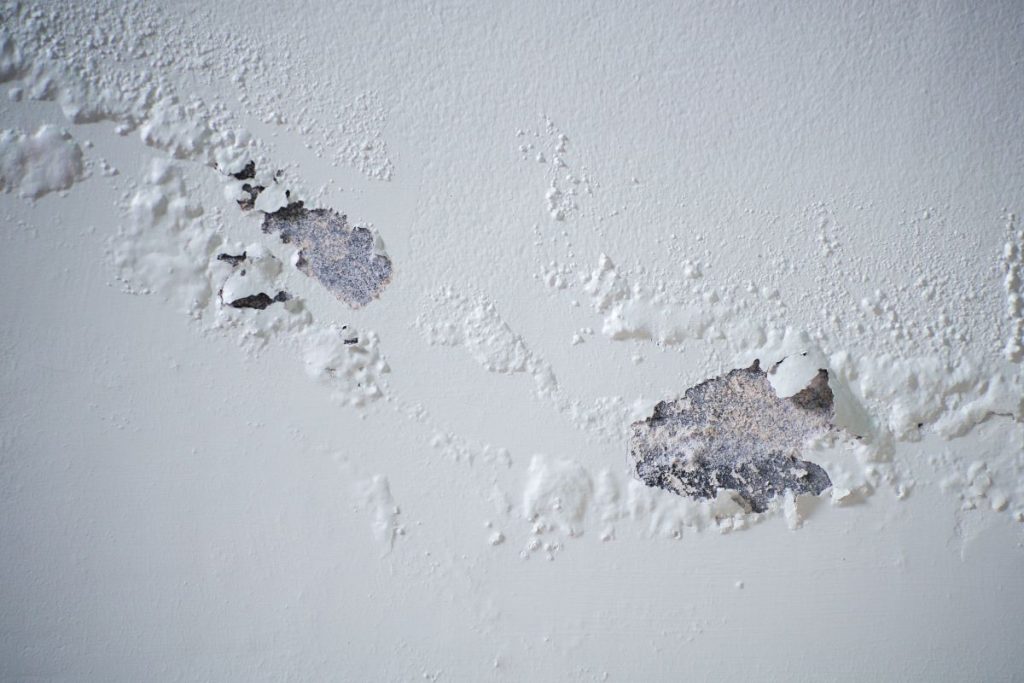
- Paint that bubbles, blisters, or peels in a patch.
- Damp or musty smell in one part of the room.
- Mould or black spotting near a ceiling corner or cornice.
- Active drips, especially after rain.
- Sagging plasterboard or a soft, swollen patch.
- Rust streaks or exposed steel, a warning sign of spalling concrete.
A faint stain that never grows may be old. A stain that spreads, darkens, or returns after each downpour is active and needs attention. If you see rust or falling concrete, treat it as urgent and read the section below.
What causes ceiling leaks in Singapore
Most ceiling leaks we attend trace back to one of five sources. The right fix depends on which one it is, so the cause has to be confirmed before any repair starts.
Bathroom above with failed waterproofing
The most common cause. Above almost every ceiling stain in a flat or condo sits a wet area: a bathroom, kitchen, or yard. When the waterproofing membrane under the floor tiles ages, cracks, or was poorly laid, shower and floor-trap water seeps through into the slab and drips into the unit below. Stains that worsen after a shower point here.
Roof or RC slab leak in the monsoon
Top-floor flats, attic spaces, and landed homes leak through the roof or the reinforced concrete (RC) flat roof slab. During the northeast monsoon, heavy rain pools on flat roofs and forces its way through hairline cracks, failed flashing, or tired membrane. A ceiling leaking after rain on the top floor usually means the roof or slab.
Concealed pipe leak
Water supply pipes, drain pipes, and chilled water pipes for aircon often run above the ceiling or inside walls. A leaking joint or a corroded pipe drips day and night with no link to rain or showering. Condensation from poorly insulated aircon pipes does the same and is easy to mistake for a roof leak.
Balcony, planter, or aircon ledge
Outdoor features collect water and need their own waterproofing. A balcony with a worn floor trap, a planter box with failed lining, or an aircon ledge with a cracked screed lets rainwater track inward and surface on the ceiling behind or below.
Inter-floor slab seepage
Sometimes water enters the slab between two floors and travels sideways before it drips, so the stain sits well away from the wet area above. This inter-floor seepage is common in older blocks and is the usual trigger for the inter-floor leak process between neighbours.
The table below maps each cause to where it shows and the typical fix. For who handles each scenario, see our guide on who to call for a ceiling leak (condo vs landed).
| Cause | Where it shows | Typical fix |
| Bathroom above, failed waterproofing | Below a toilet, kitchen, or yard; worse after showers | Re-waterproof the floor, or PU injection from below |
| Roof or RC slab leak | Top-floor or attic ceiling; worse after rain | Roof repair, re-lay membrane, seal cracks and flashing |
| Concealed pipe leak | Anywhere; constant drip unrelated to rain | Repair or replace the pipe, then reinstate |
| Balcony, planter, aircon ledge | Ceiling behind or below the feature | Re-waterproof the ledge, clear and reseal the trap |
| Inter-floor slab seepage | Stain offset from the wet area above | PU grout injection, confirm with water test |
Why the stain is rarely under the real source
Water does not fall straight down once it enters concrete. It follows the path of least resistance along the slab, down a pipe run, across a beam, until it reaches a crack or junction box and drips out. The brown patch marks where water escaped, not where it got in. The real entry point can sit a metre away, behind a wall, or inside the slab.
This is the biggest reason DIY patching fails. Reseal the spot above the stain, and the water just finds the next weak point and reappears weeks later. Tracing the true source needs proper tools and experience.
Why you should not just repaint over it
Repainting a ceiling water stain hides the symptom and leaves the cause running. Within weeks the stain bleeds back through the new paint because the trapped moisture is still there. Hidden damp also keeps soaking the slab and rebar, which corrodes the steel and triggers spalling concrete, where chunks of the ceiling crack and fall.
Stain-blocking primer has its place, but only as the final step after the leak is stopped and the ceiling has dried. Our Ceiling Leak Repair service treats the source first, then reinstates the finish.
How ceiling leaks are diagnosed
A reliable repair starts with finding the source, not opening the ceiling at random. Our crew uses a few methods together to confirm where water comes from.
- Moisture meter: maps how wet the slab is across the ceiling, pointing back toward the entry zone.
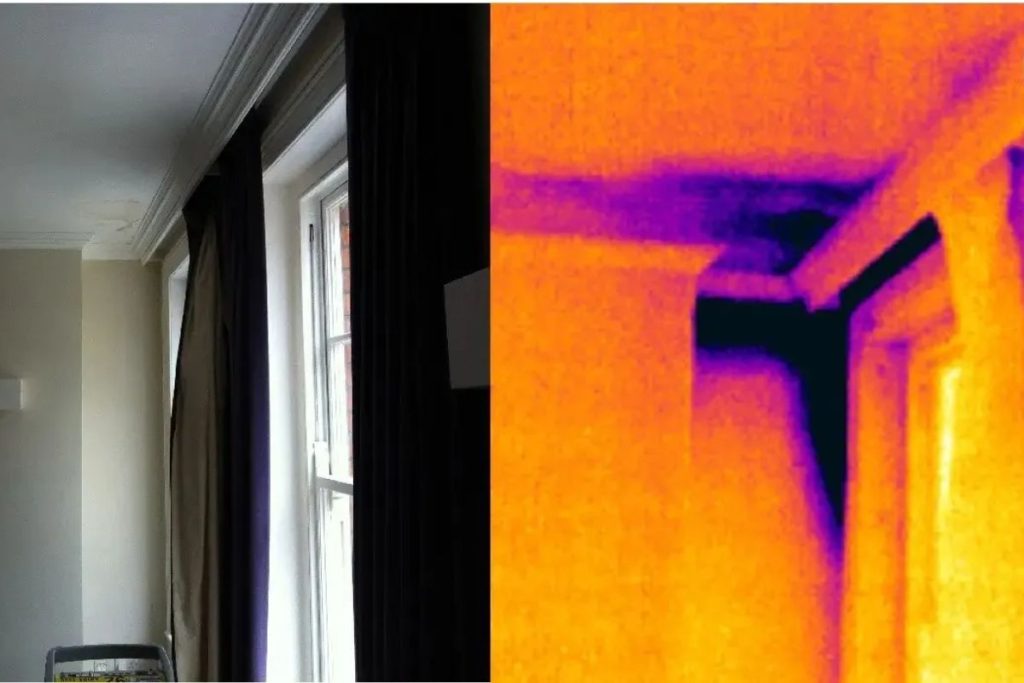
- Thermal imaging: shows cool damp tracks and hidden pipe runs without cutting anything.
- Water testing: ponds a suspected wet area, balcony, or trap under controlled timing to confirm the source.
- Visual and access checks: a small inspection point in the false ceiling to see pipes and slab directly.
Used together, these confirm the cause before any hacking or sealing, which keeps the repair targeted and stops the guesswork that drives repeat visits. For broader water intrusion across walls and floors, our Water Leakage Repair service uses the same approach.
How ceiling leaks are repaired
The fix matches the cause. These are the methods our crews use most, often in combination.
- PU injection: polyurethane grout injected into slab cracks expands on contact with water and seals the path. Good for inter-floor seepage.
- Re-waterproofing the wet area: hack the bathroom or yard floor, lay a new membrane, screed, and tile. The lasting fix when upstairs waterproofing has failed.
- Pipe repair or replacement: expose, repair, or replace the leaking pipe, then close up.
- Spalling treatment: chip away loose concrete, treat and coat exposed rebar against rust, then patch back to a sound finish.
- Reinstatement: dry the slab, apply stain-blocking primer, skim, and repaint.
Every Roof Doctors repair comes with a workmanship warranty and before and after photos, so you can see what was done above the ceiling, not just the paint below it.
Condo vs Landed: who is responsible
Responsibility for a ceiling leak depends on your property type and where the source sits. The short version follows, with detailed guides linked for each case.
Condominiums
In a condo it comes down to common property versus private lot. A leak from the external facade or a shared pipe may fall to the MCST, while a leak from your own bathroom is yours. See condo ceiling dripping: MCST vs owner responsibility for the split.
Landed homes
In a landed property the owner carries the full repair, since there is no upstairs neighbour or management corporation to share it. The upside is you can engage a contractor directly and move fast. In any property type, knowing how a ceiling leak insurance claim works in Singapore can offset part of the cost.
When a ceiling leak is urgent
Most ceiling leaks can wait a few days for an inspection. Some cannot. Treat these as urgent and switch off the affected circuit at the DB box first.
- Water dripping near a light point, ceiling fan, or any wiring: an electrical and shock risk.
- Concrete cracking, bulging, or chunks falling from the ceiling: spalling that can injure someone.
- A fast-growing wet patch or steady stream rather than a slow drip.
- Sagging plasterboard that looks ready to give way.
If you see any of these, place a bucket, keep people clear, and call us. Catching spalling early on a Ceiling Leak Repair visit is far cheaper than rebuilding a ceiling after it collapses.
Ceiling leak repair cost (indicative)
The figures below are indicative SGD ranges for planning only. The real price depends on the source, access, and extent of damage, and is confirmed after an on-site inspection. Shared-cost cases under an MCST may change what you personally pay.
| Repair type | Indicative cost (SGD) | Notes |
| Inspection with leak detection | Free on-site (Roof Doctors) | Moisture meter and visual; water test may be extra |
| PU grout injection | From around $400 to $1,200 | By number of injection points |
| Re-waterproofing a wet area floor | Around $1,500 to $4,000+ | Hack, membrane, screed, re-tile; varies by size |
| Concealed pipe repair | Around $300 to $1,500 | By access and pipe location |
| Spalling concrete treatment | Around $500 to $2,500+ | By affected area and rebar condition |
| Ceiling reinstatement and repaint | Around $200 to $800 | Stain block, skim, and paint once leak is stopped |
For a firm quote, the source has to be confirmed first. That is what a free inspection is for. Once we know the cause, we give a fixed price before work begins.
Frequently Asked Questions
Why does my ceiling leak only when it rains?
A leak that appears only after rain usually points to the roof, an RC flat roof slab, or an outdoor feature like a balcony, planter, or aircon ledge. Rain pools on these surfaces and forces water through cracks or failed waterproofing. A leak unrelated to rain is more likely a bathroom above or a concealed pipe.
Can I just paint over a ceiling water stain?
No. Paint hides the stain for a few weeks, then the water bleeds back through. The trapped moisture also keeps soaking the slab and can corrode the steel inside, leading to spalling concrete. Stop the leak and dry the ceiling first, then use a stain-blocking primer.
Who pays for an ceiling leak?
When the leak comes from the flat above, runs an inter-floor leak process and the cost is often shared between the upper-floor and lower-floor owners. The exact split depends on the findings. Our ceiling drip guide explains how this usually plays out.
Is a leaking ceiling dangerous?
It can be. Water near light points, fans, or wiring is an electrical and shock risk, so switch off that circuit. Long-term damp corrodes the rebar and can cause spalling, where concrete cracks and falls. If you see rust streaks, bulging, or falling pieces, treat it as urgent and keep people clear.
How long does ceiling leak repair take?
A PU injection or pipe repair is often done in a day. Re-waterproofing a bathroom floor takes longer because of hacking, membrane curing, and re-tiling, usually several days. Drying time before repainting adds a few more. We confirm the timeline after the inspection.
How soon can you inspect my ceiling leak?
We aim to schedule a free on-site inspection within a day or two, and sooner for urgent cases such as electrical risk or falling concrete. WhatsApp us at 6852 9177 with a photo of the stain and we will arrange a visit.