
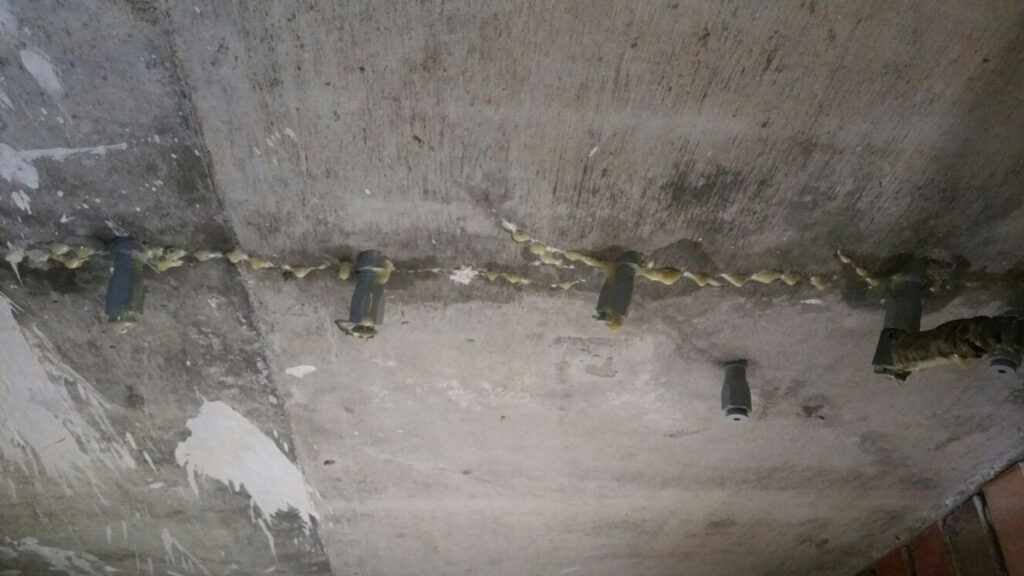
PU injection grouting into a leaking concrete crack

Grouting and injection

Grouting means different things on different jobs. At one end it means refreshing the grout lines between bathroom tiles. At the other it means injecting resin deep into a leaking crack in a basement wall. Most failed DIY fixes come down to the wrong material, such as cement grout in a wet area that needed epoxy.

Roof Doctors matches the grout or injection system to the problem. Our grouting services cover tile joints, structural voids and leaking cracks in homes and commercial buildings across Singapore. Each job starts with a free inspection and ends with a workmanship warranty.

Call Us WhatsApp Us
Free first inspectionBizSafe and BCA-registeredWorkmanship warranty
Grouting types

Types of grouting services and where we use them

Grouting falls into two families. Tile grouting fills the joints between tiles. Injection grouting pushes resin or cement into cracks and voids inside the structure to stop water or restore strength.

Type Material Typical use
Tile grouting Cement or epoxy grout Bathroom, kitchen and floor tiles, swimming pool tiles
Structural grouting Non-shrink cementitious grout Voids under base plates, gaps around columns, load transfer
PU injection grouting Polyurethane resin Active water leaks through cracks in walls, slabs and basements
Epoxy injection Epoxy resin Bonding structural cracks in beams, columns and slabs
Cementitious grouting Cement-based grout Basement walls, voids behind tiles and general filling

Tile grouting

Cracked, missing or mouldy grout lets water get behind the tiles. We rake out the old grout to the right depth and refill the joints with cement or epoxy grout in a colour that matches your tiles.

PU injection grouting

For a crack that is leaking right now, we drill injection ports along it and pump in polyurethane resin. The resin reacts with water and expands to seal the path inside the concrete.

Epoxy injection

Epoxy resin bonds the two faces of a dry structural crack back together and restores much of the concrete’s strength. We use it on cracks in beams, columns and slabs after the movement that caused them has stopped.

Structural and cementitious grouting

Non-shrink cement grout fills gaps that carry load, such as voids under machine bases and steel column base plates. General cement-based grout fills hollow spots behind tiles and voids in basement walls.

Where we use it

Where we use grouting

Bathrooms and kitchens

Bathrooms and kitchens need re-grouting more often than any other room. Shower areas and kitchen floors get wet every day, and failing grout shows up first as black lines and loose tiles. Epoxy grout, or cement grout with additives, lasts far longer here.

Swimming pools and water features

Pool tiles sit under water all year and also take the pool chemicals. We use epoxy grout made for immersion, and the water level has to come down below the area we are working on.

Basements, lift pits and water tanks

Walls below ground take water pressure from the soil outside. PU injection seals the cracks from inside the basement. Nobody needs to dig down to the outer face of the wall.

Structural cracks and voids

Cracks in beams and columns, gaps under machine bases and hollow spots behind tiles need epoxy or non-shrink cement grout. If a crack is still moving, we look at the cause before we inject anything.

Materials

Grouting materials we use

Epoxy resins

Epoxy is the toughest option and does not soak up water or stains. It suits wet areas, kitchens and pools, and it bonds structural cracks. It costs more than cement grout and needs a skilled hand.

Polyurethane

PU resin stays flexible and reacts with water. It can seal a crack while water is still coming through. It suits cracks that may move a little over time.

Cement-based grouts

Cement grout is the affordable choice and the easiest to colour-match. It suits dry and lightly wet tiled areas and fills large voids well.

Wall crack sealed after PU injection grouting
PU injection grouting into a leaking concrete crack

Re-grout or repair

Re-grout or repair? How to tell

If the grout lines are only stained, cracked or mouldy on the surface, a re-grout refreshes them and seals the joints again. If water is already getting behind the tiles, new grout alone will not stop it. That is a waterproofing problem, and we will say so before you spend money on a cosmetic patch.

Signs a re-grout is enough

  • Grout is discoloured or mouldy, but the tiles are firm
  • Small cracks in the grout lines with no damp patches nearby
  • Grout has worn down below the tile edge

Signs you need a waterproofing repair

  • Tiles sound hollow when tapped, or have lifted
  • Damp patches, peeling paint or stains on the wall next to the wet area
  • A neighbour below reports a leak under your bathroom
  • Water keeps seeping from the grout lines days after the last shower

A leak into the flat below usually needs ceiling leakage repair from the unit above, and damp walls next to a bathroom often need wall leakage repair as well as new grout.

Additives and colour

Waterproofing additives and colour matching

In bathrooms and kitchens we mix waterproofing and mould-resistant additives into the grout, or use epoxy grout. The joints then shed water and hold off the black mould that grows fast in Singapore’s humidity. Grout still does not replace the waterproofing membrane under the tiles. The grout protects the joints, and the membrane protects the slab.

For colour, pick from our swatch range to match the existing tile lines or give the whole room a new shade.

Process

How our grouting works

  1. Inspect the area and trace where the water comes from, with a moisture meter where needed
  2. Pick the system that suits the job, such as epoxy grout or PU injection
  3. Prepare the surface by raking out old grout or drilling injection ports
  4. Apply or inject the grout and let it cure
  5. Clean up, water-test where relevant and hand over a written warranty

Why choose Roof Doctors

Why Roof Doctors

  • Specialist waterproofing and roofing contractor, 15+ years in Singapore
  • Free inspection and written quote, no obligation
  • BizSafe and BCA-registered (ROC 201132164H)
  • Workmanship warranty on every job
  • The right material for each job, explained before we start

Coverage

  • HDB, condo and landed homes
  • Commercial and industrial
  • Singapore-wide

Get A Free Quote

Fields marked with * are required

    FAQ

    Frequently asked questions

    Q. Should I re-grout or do a proper repair?

    If only the surface grout is damaged, a re-grout works. If water is getting behind the tiles, new grout will not stop it and the area needs waterproofing. The inspection tells us which one you have.

    Q. What is the difference between epoxy and cement grout?

    Epoxy is tougher and does not absorb water or stains, which suits wet areas. Cement grout costs less and is easier to colour-match. We recommend one based on where the tiles are and how the room is used.

    Q. Can grout be waterproof?

    Epoxy grout, and grout with waterproofing additives, resist water and mould far better than plain cement grout. Grout still does not replace a waterproofing membrane under the tiles.

    Q. Can you match my existing grout colour?

    Yes. You choose from our swatch range to match or refresh your tile lines.

    Q. How long does grouting last?

    A good cement re-grout lasts several years with normal cleaning, and epoxy grout lasts longer. Crack injection is a permanent repair when the crack has stopped moving.

    Q. Do you offer a warranty?

    Every job comes with a workmanship warranty, stated in writing with your quote.

    Mouldy grout lines or a leaking crack?

    Book a free inspection and get the right grouting fix.

    Call Us WhatsApp Us