

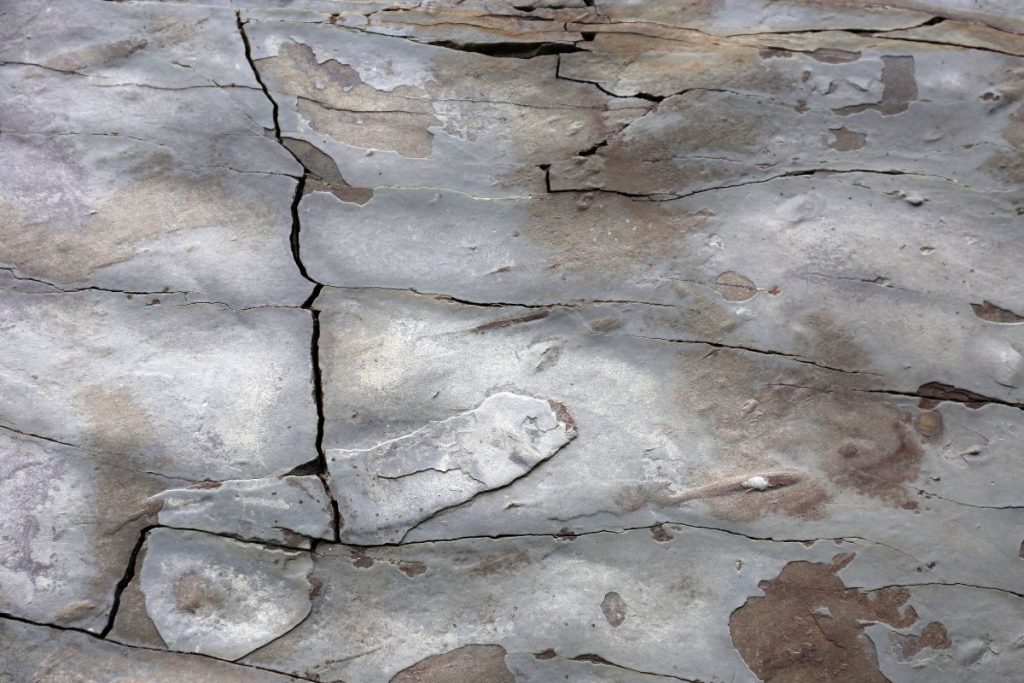
Flakes of concrete on the floor, a brown stain spreading across the ceiling, a patch of rough grey surface where the plaster used to be smooth. Many Singapore homeowners assume ceiling spalling and floor spalling are two separate faults. They share one root cause: the steel rebar inside the slab is rusting and pushing the concrete apart. What changes is where the damage sits, how dangerous it is, and what a proper repair has to do. This guide explains both, shows how to tell them apart, and walks through how spalling concrete is repaired in Singapore so it stays fixed.
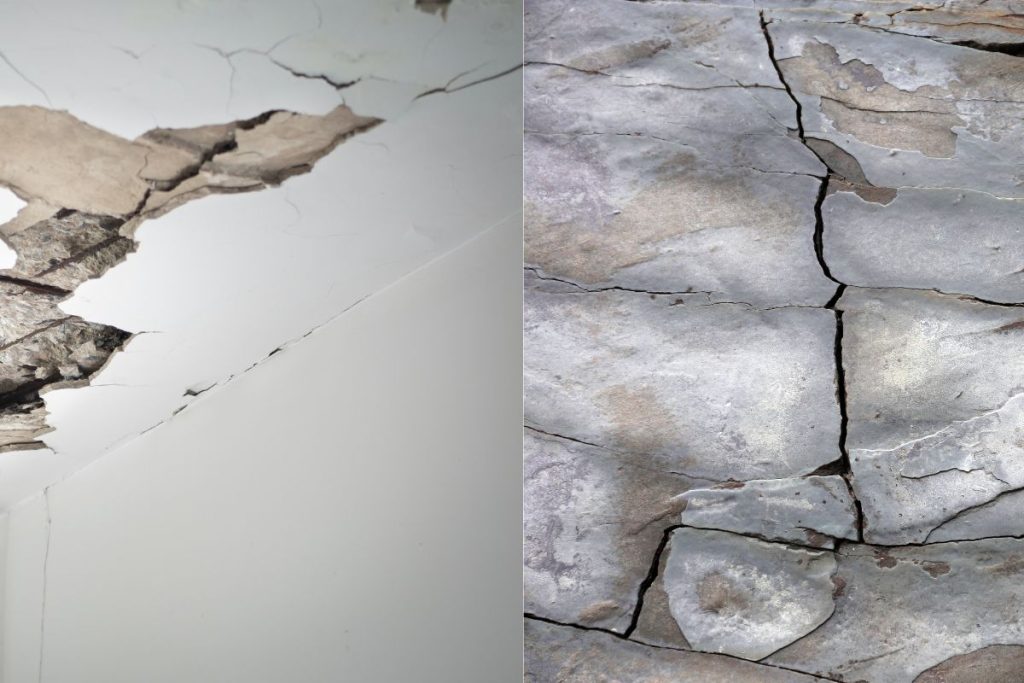
What spalling concrete is
Spalling concrete is concrete that flakes, cracks, or breaks away from a slab as the steel rebar buried inside it rusts and expands. Reinforced concrete is built from two materials working together: concrete that handles compression and steel bars that handle tension. The steel sits a few centimetres below the surface. When that steel stays dry, the slab can last for decades. When water and air reach it, the steel corrodes, swells, and forces the concrete cover off from the inside.
Some people call it concrete cancer, and the name fits because it spreads if you ignore it. Spalling is common in older Singapore flats, especially HDB blocks built before the 1990s where bathroom and kitchen slabs have taken decades of moisture. It shows up on ceilings, floor edges, balcony slabs, and around pipe penetrations. The damage you see is the late stage of a process that started out of sight.
The shared root cause explained
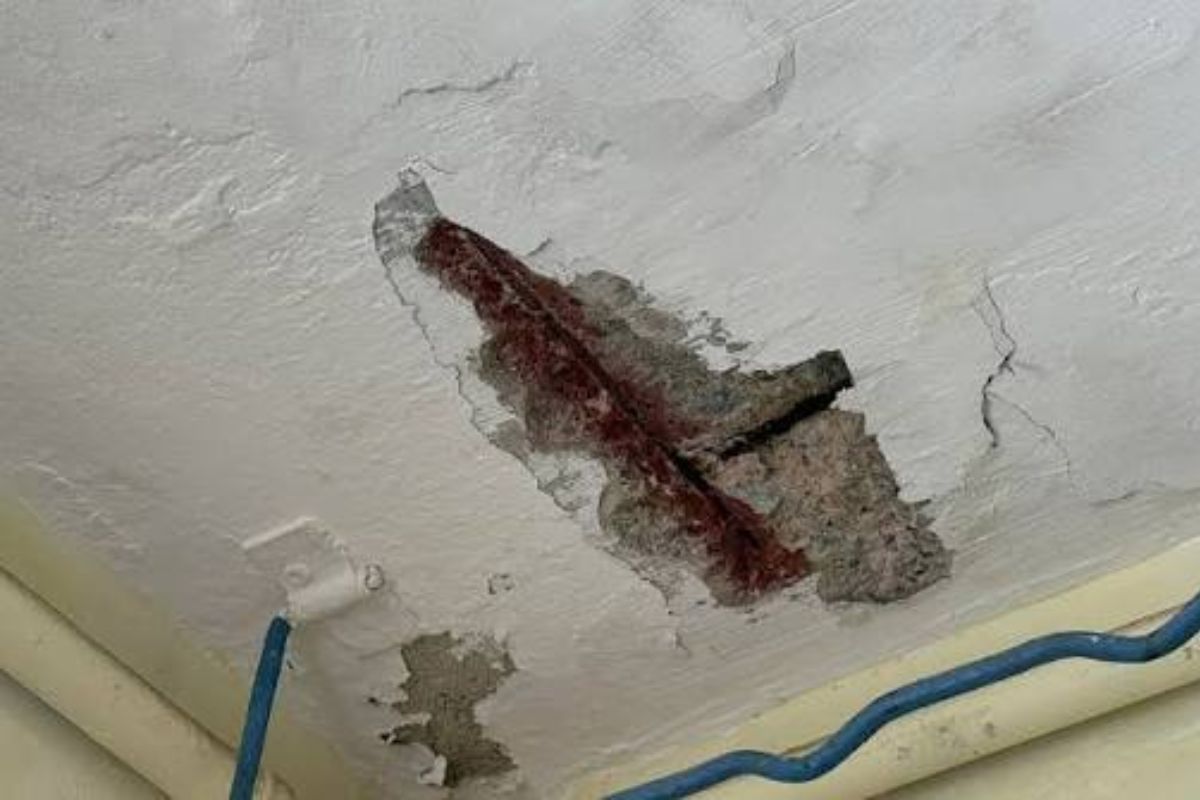
Whether the damage is overhead or underfoot, the mechanism is the same. Water reaches the rebar, the steel rusts, and the rust takes up far more space than the steel did. That expansion cracks the concrete cover and pushes it off.
Two things bring water and air to the steel. The first is direct moisture: a leaking bathroom above, a failed waterproofing membrane, condensation, or rain driving into a balcony slab. The second is carbonation. Carbon dioxide from the air slowly soaks into the concrete and lowers its alkalinity. Fresh concrete is alkaline enough to keep a protective film around the steel. As carbonation reaches the depth of the rebar, that protection breaks down and corrosion starts even with only small amounts of moisture. This is why spalling is so common in older Singapore buildings: carbonation has had decades to work its way in, and the humid climate keeps the slabs damp.
Once corrosion begins it feeds itself. The expanding rust opens cracks, the cracks let in more water, and more water drives faster corrosion. A small flake left alone turns into a patch of exposed rebar within a year or two.
How to identify spalling concrete
Spalling gives clear warning signs before chunks fall. Check ceilings, floor edges, balconies, and the areas under bathrooms and kitchens for these markers:
- Fine cracks running in lines, often following the path of a steel bar underneath.
- Rust-coloured brown or orange stains bleeding through paint or plaster.
- Flaking, blistering, or hollow-sounding patches when you tap the surface.
- Exposed steel rebar, rusted and sometimes swollen, where the cover has come off.
- Concrete debris or grit collecting on the floor below a ceiling, or crumbling along a floor edge.
A hollow sound when you tap a ceiling is one of the earliest clues. It means the concrete cover has already separated from the slab and is ready to drop. If you see any exposed rebar, treat it as active spalling, not a cosmetic blemish.
Ceiling spalling vs floor spalling: a comparison
Same cause, different setting. The table below sums up how ceiling spalling and floor spalling compare across the points that decide how urgent the problem is and how it gets repaired.
| Aspect | Ceiling spalling | Floor spalling |
| Typical location | Underside of slabs, often below a wet area above such as a bathroom or kitchen | Floor slab surface and edges, balconies, and around floor traps and pipe outlets |
| Usual cause | Leak or failed waterproofing in the unit above, plus carbonation reaching the rebar | Moisture rising through the slab from below, ponding water, and carbonation over time |
| Safety risk | Higher. Concrete can fall onto people or belongings below | Lower for falling debris, but cracks and uneven surfaces create trip and load concerns |
| Access | Overhead work needing scaffolding or a platform, plus overhead protection | Work at floor level, easier to reach but disruptive to use of the room |
| Typical fix | Hack to sound concrete, treat rebar, patch with overhead mortar, recoat the ceiling | Hack and clean, treat rebar, level or resurface the slab, then apply a protective coating |
Why ceiling spalling is often a safety priority
Ceiling spalling sits over your head, and that changes everything. As the rust expands and the cover loosens, gravity is working against you. A loose patch can drop without warning onto a bed, a dining table, or a person walking below. In HDB flats the spalling ceiling is usually the underside of the unit above, so the moisture source often sits in a neighbour’s bathroom, which adds a coordination step on top of the repair.
Because of the fall risk, we treat ceiling spalling with exposed or near-exposed rebar as urgent. The safe first move is to stop using the space directly below and get the area inspected. Do not poke or scrape at a spalling ceiling yourself, since that can bring down more than you expect.
Why floor spalling behaves differently
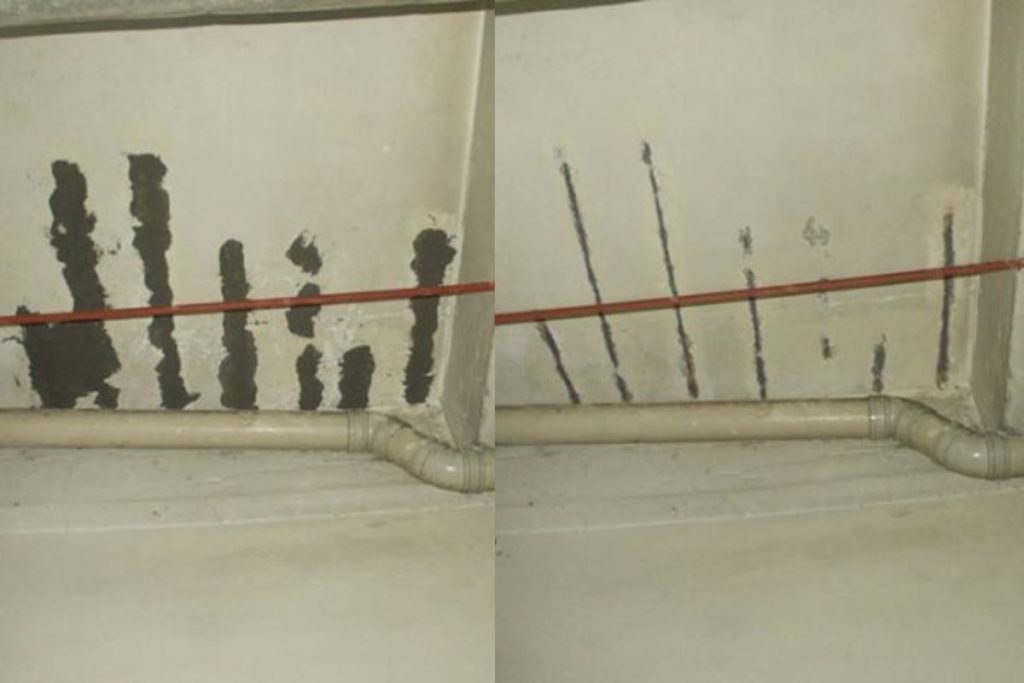
Floor spalling rarely threatens to fall on anyone, so the danger is slower and quieter. A floor slab carries load and foot traffic, so cracks and loose sections get worse every time someone walks over them or furniture sits on them. Moisture often comes from below or within the slab rather than from a wet area above, which means a balcony, a ground-floor unit, or a slab over a damp void is a common spot.
Left alone, floor spalling spreads sideways and downward. Tiles lift, the surface turns uneven, and water tracks along the cracks into the slab and the rooms below. The fix has to restore a level, sound, sealed surface that can take traffic again, which is a different goal from patching an overhead ceiling.
Why the fix differs even with the same cause
The root cause is identical, so the core repair steps are identical: expose the steel, treat it, and seal it away from water again. What differs is the setting, and the setting drives the method.
Ceiling repair is overhead work. The patching mortar has to bond and hold against gravity, so crews use a non-sag repair mortar built up in layers, work off scaffolding or a platform, and protect the room below while they hack. The finish is a recoated ceiling that blends back in. Floor repair is the opposite problem. The mortar wants to fill and level, traffic and load come back onto it, and the surface needs a hard wearing finish. Floor work usually ends with levelling or resurfacing and a protective floor coating, and the room often has to stay out of use while everything cures. For deeper structural concrete damage on either surface, our Concrete Repair work covers strengthening and reinstatement beyond surface patching.
The correct repair process for both
A lasting spalling concrete repair follows the same sequence whether it is on a ceiling or a floor. Skipping any step is the main reason a patch fails within a year. This is the process our crews use for proper Spalling Concrete Repair in Singapore:
- Hack back to sound concrete. Remove all loose, cracked, and hollow material until only solid concrete remains around the damage.
- Clean and treat the rebar. Wire-brush or sand the exposed steel to remove rust down to clean metal, then check whether any bar has lost too much section and needs reinforcing.
- Apply an anti-corrosion primer. Coat the cleaned steel with a rust-inhibiting primer so the rebar is protected before it is buried again.
- Rebuild with polymer-modified mortar. Build the cover back up with a repair mortar that bonds strongly and resists water, using a non-sag mortar overhead and a levelling mortar on floors.
- Apply an anti-carbonation coating. Seal the finished surface with a coating that blocks carbon dioxide and moisture, which slows the carbonation that started the problem.
- Fix the water source. Trace and stop the leak, condensation, or failed waterproofing feeding the slab, because a repair over an active leak will spall again.
The water source step matters most. If you own or live in an HDB or BTO flat, the rules on who pays and who arranges access can affect how you tackle the leak above a spalling ceiling, so it is worth reading what owners should know about HDB and BTO spalling concrete before you start. When you bring in a contractor, the anti-corrosion primer and anti-carbonation coating are the steps cheaper jobs skip, so our guide on how to choose a spalling concrete contractor in Singapore explains what to ask for in the quote.
How to stop spalling from coming back
Spalling returns when the repair treats the surface and ignores the water. Two habits keep it gone. First, fix the leak at the source before patching, whether a bathroom membrane, a cracked floor trap, or a neighbour’s waterproofing. Second, keep the protective coating intact, since the anti-carbonation layer is what stops air and moisture reaching the steel again.
- Repair the moisture source first, then the concrete, never the other way round.
- Keep wet areas above a spalling ceiling properly waterproofed and re-checked.
- Re-apply or touch up the protective coating when it wears or peels.
- Inspect older slabs every couple of years so small cracks get caught before they spall.
Spalling concrete repair cost in Singapore
Cost depends on the area affected, how deep the damage runs, whether rebar needs reinforcing, and the access. The figures below are indicative SGD ranges to help you plan. The only reliable number comes from an on-site inspection.
- Small ceiling patch repair: indicative SGD 350 to 800, depending on area and access.
- Larger ceiling spalling with scaffolding and recoating: indicative SGD 800 to 2,000 and up.
- Floor spalling repair with levelling and coating: indicative SGD 600 to 2,500 and up by area.
- Fixing the water source above, such as bathroom waterproofing: quoted separately after inspection.
Overhead work usually costs more than the same area on a floor because of the scaffolding and the slower, layered patching. A combined repair that fixes the leak and the spalling together saves you a repeat job.
Frequently Asked Questions
What causes spalling concrete?
Spalling is caused by steel rebar inside the concrete rusting and expanding. Water and carbonation reach the steel, it corrodes, and the rust pushes the concrete cover off. In Singapore the usual triggers are leaks from wet areas, failed waterproofing, and decades of carbonation in older HDB slabs.
Is ceiling spalling dangerous?
Yes, more so than floor spalling. Loose concrete on a ceiling can fall onto people or belongings below without warning. If you see exposed rebar or hear a hollow sound when you tap the ceiling, stop using the space directly under it and get it inspected before it drops.
Is floor spalling the same problem as ceiling spalling?
The cause is the same, rusting rebar inside the slab. The difference is the setting. Floor spalling carries load and traffic and often draws moisture from below, while ceiling spalling is overhead and usually fed by a leak above. That changes how each one is repaired.
Can I just patch over it?
No. Patching over spalling without treating the rusted rebar and stopping the water source traps the corrosion inside. The steel keeps rusting under the patch, and the new layer spalls off within a year or two. The rebar must be cleaned, primed, and sealed first.
Will spalling come back after repair?
Only if the water source is left unfixed or the protective coating is skipped. A repair that treats the rebar, rebuilds with polymer-modified mortar, seals with an anti-carbonation coating, and stops the leak holds for years. Re-check older slabs every couple of years.
How long does spalling concrete repair take?
A small ceiling patch can be done in a day. Larger jobs with scaffolding, floor levelling, or coating that needs curing time run over several days. Fixing the water source above can add time. We give a realistic schedule after inspecting the site.