

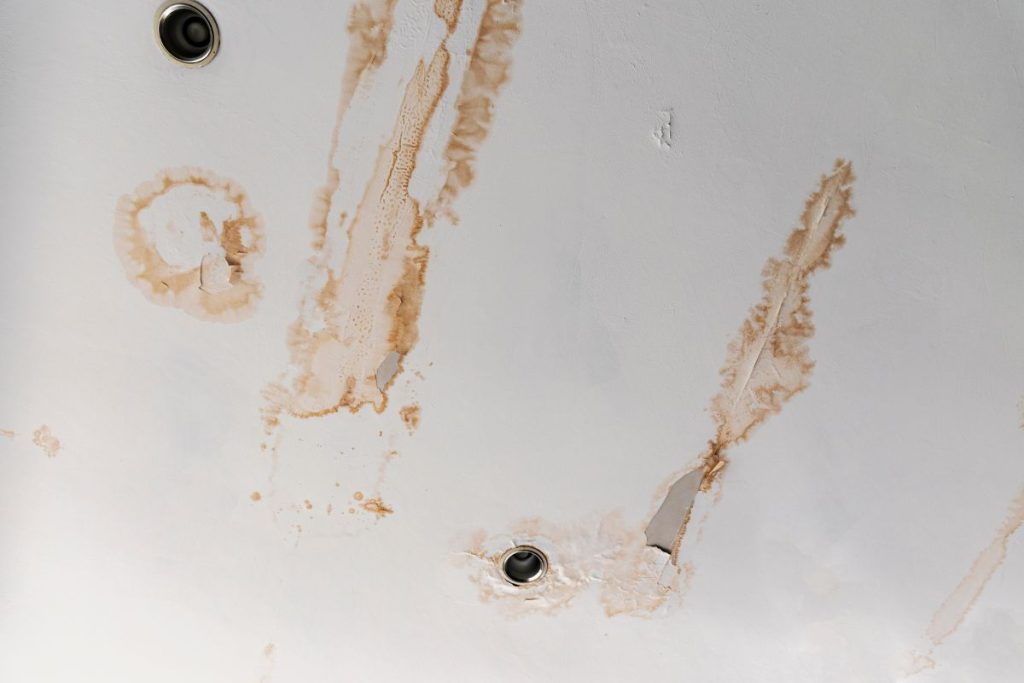
A ceiling dripping water in your HDB flat almost always means moisture has worked through the concrete slab and found a way down. In most blocks that water comes from the unit directly above yours, usually from a bathroom or kitchen floor that has lost its waterproofing. If you live on the top floor, the source can sit in the RC roof or a service pipe instead. This guide walks through what an HDB ceiling drip really means, the common causes, the inter-floor leak rules HDB applies, indicative repair costs in SGD, and the steps that stop the drip from coming back.
What an HDB ceiling drip usually means
An HDB ceiling is the underside of the structural slab that separates your flat from the unit above. That slab is shared. When you see ceiling dripping water, paint blistering, or a brown ring spreading across the plaster, water has saturated the slab and is now finding the lowest point to drip from. The drip you notice rarely sits right under the source. Water travels sideways along the concrete and along conduit lines before it falls, so the wet patch can be a metre or more away from where the leak started.
For most flats this points to inter-floor seepage from the flat above. The water comes from a wet area on the upper unit, soaks the slab over weeks, and drips into your ceiling. If your flat is on the top floor, there is no unit above you, so the source is usually the RC roof, a roof gutter, or a pipe running through the slab. Knowing which case you are in changes who you talk to and how the repair is scoped. For the full picture of how water moves through a building, see our guide on why ceilings leak and how water travels.
Common causes in HDB flats
A handful of causes account for most HDB ceiling drips. The signs differ, and so does the fix. Use the table below to match what you are seeing to a likely source, then read the notes under each cause.
| Cause | Typical sign | Fix |
| Failed bathroom waterproofing above | Drip worsens after the upstairs unit showers or mops; wet patch under their wet area | Re-waterproof the floor above (membrane and screed), usually the upper flat’s job |
| Floor-trap or pipe leak | Damp stays constant day and night; smell near the drip; staining follows a pipe line | Trace and repair the failed pipe joint or floor trap, then reseal |
| Top-floor RC roof leak | Top-floor flat only; drip tracks rain and monsoon season | Repair and re-waterproof the RC roof slab, often an HDB town council scope |
| Ageing waterproofing membrane | Older flat, slow spreading stains, no single sharp drip | Strip and relay the membrane in the wet area above the affected ceiling |
Failed bathroom waterproofing above
This is the most common cause. Every HDB bathroom and kitchen floor has a waterproofing membrane under the tiles. Over 15 to 20 years that membrane cracks, the screed shifts, or grout lines open up. Water then sits on the slab instead of draining away, soaks through, and drips into the ceiling below. The tell is timing: the drip gets worse after the upstairs neighbour showers, mops, or runs the kitchen tap heavily.
Floor-trap or pipe leak
Concealed pipes and floor traps run inside or just above the slab. A loose joint, a corroded pipe, or a cracked floor trap leaks at a steady rate whether or not anyone is using water. If your ceiling stays damp around the clock and there is a faint musty or sewage smell near the drip, a pipe or trap is the likely source. This needs a plumber or a leak detection check before any waterproofing work.
Top-floor RC roof leak
If you live on the top floor, the slab above you is the reinforced concrete roof. Cracks in the roof membrane, blocked roof drains, or pooling rainwater push moisture down into your ceiling. The giveaway is weather: the drip appears or worsens during heavy rain and the monsoon months, then eases in dry spells. Roof and common-area repairs often fall to the town council, so report it early.
Ageing membrane
In older blocks the original waterproofing simply reaches the end of its life. There is no single burst or sharp drip, just slow staining that spreads month by month and paint that keeps peeling no matter how often it gets repainted. The only lasting answer is to strip and relay the membrane in the wet area sitting above the stained ceiling.

The HDB inter-floor leak rule
Because the slab is shared between two flats, HDB treats inter-floor leaks as a shared problem. Neither owner owns the slab alone. HDB’s standing position is that the upper and lower flats should work together to find the source and share the repair cost, since the water originates above but the damage shows below. HDB and the town council can step in to mediate when neighbours cannot agree, but they prefer the two parties to resolve it directly first.
A professional leak detection report carries weight in these talks. When an independent contractor tests the slab and pinpoints the source, both owners have a clear, neutral basis for splitting the cost rather than arguing over whose fault it is. If the source turns out to sit in common property such as the roof or a shared riser, the town council usually takes responsibility instead of the neighbour. For the full breakdown of who handles each case across HDB, condo, and landed homes, read who to call for a ceiling leak in Singapore. If you plan to recover the cost, our guide on how to claim a ceiling leak on insurance covers what most home policies will and will not cover.
Keep it civil. A mediated cost-share moves far faster than a dispute, and most HDB neighbours settle once a report names the source clearly.
Step-by-step: what to do when your HDB ceiling drips
- Catch the water and protect the floor. Place a pail under the drip, move furniture and electronics clear, and lay down old towels. Standing water near light fittings is a shock hazard, so switch off that circuit if the drip is near a ceiling light.
- Take dated photos and notes. Record when the drip appears, whether it tracks rain or the neighbour’s water use, and how far the stain has spread. This evidence helps later with the neighbour, the town council, or an insurer.
- Speak to the unit directly above you. Tell them politely what you are seeing. Many neighbours do not realise their floor is leaking until you raise it.
- Report to your town council if you suspect a roof or common-area source, or if the upstairs owner will not cooperate. The council can advise on mediation.
- Arrange a professional leak detection check. A specialist traces the true source so the right repair gets done once, rather than guesswork that fails again.
- Hold off on repainting until the source is fixed and the slab has dried. Fresh paint over a wet ceiling peels within weeks.
How the repair works
A proper HDB ceiling drip repair follows four stages. Skipping the first stage is why so many patch-up jobs fail and the drip returns.
- Trace the source. The crew uses moisture meters, dye testing, or thermal imaging to find exactly where water enters the slab. Without this step a repair is a guess.
- Re-waterproof the wet area. Most fixes mean stripping the failed membrane in the bathroom or kitchen above, laying a new waterproofing layer, and reinstating the screed and tiles. For a top-floor flat this happens on the RC roof instead.
- Treat spalling concrete. Long-term leaks rust the steel reinforcement inside the slab, which then cracks and pushes the concrete off. The crew hacks back the loose concrete, treats the exposed steel against further rust, and patches with repair mortar.
- Reinstate the ceiling. Once the slab is dry, the crew skims, primes, and repaints the affected ceiling so it matches the rest of the room.
HDB ceiling drip repair cost
Costs depend on the source, how far the damage has spread, and whether the slab has started spalling. The figures below are indicative SGD ranges to help you budget. They are not a quote, and the only way to price your job accurately is an on-site inspection.
| Work item | Indicative cost (SGD) | Notes |
| Leak detection / source tracing | 150 to 450 | Moisture mapping, dye or thermal test |
| Bathroom floor re-waterproofing (above) | 1,200 to 3,000 | Strip, membrane, screed, retile one wet area |
| Spalling concrete treatment | 80 to 200 per m2 | Hack, treat steel, patch with repair mortar |
| Ceiling skim and repaint | 250 to 700 | Per affected room, after the slab dries |
| Top-floor RC roof waterproofing | 2,500 and up | Often town council scope; varies with roof area |
Where the leak is an inter-floor case, remember that HDB encourages the upper and lower flats to share these costs. A clear leak detection report makes that split far easier to agree on.
How to prevent it returning
A drip that comes back usually means the real source was never fixed. These habits keep your ceiling dry after the repair.
- Fix the source, not the stain. Re-waterproofing the wet area above is what stops the drip; repainting alone only hides it for a few weeks.
- Re-waterproof wet areas every 10 to 15 years, before the membrane fails on its own.
- Reseal grout lines and silicone joints in bathrooms when you spot them cracking or going black.
- Keep floor traps and drains clear so water drains away instead of pooling on the slab.
- Act on the first stain. A small ring is cheap to fix; a saturated, spalling slab is not.
- Ask for a workmanship warranty on any waterproofing work, so a repeat leak within the warranty period gets put right at no extra cost.
Frequently Asked Questions
Why is my HDB ceiling dripping?
In most flats the water comes from the unit directly above yours, usually a bathroom or kitchen floor that has lost its waterproofing, and it soaks through the shared slab before dripping into your ceiling. On the top floor the source is more often the RC roof or a pipe running through the slab. A leak detection check confirms which one it is.
Who pays for an HDB inter-floor ceiling leak?
HDB treats the slab as shared, so it encourages the upper and lower flats to find the source together and share the repair cost. A neutral leak detection report makes that split easier to agree on. If the source sits in common property such as the roof, the town council usually takes responsibility instead.
Can I fix an HDB ceiling drip myself?
You can manage the symptoms, catch the water, protect your floor, and take photos, but a DIY repaint will not stop the drip because the source sits above your slab. The lasting fix means tracing the leak and re-waterproofing the wet area above, which needs proper access and licensed work.
How long does an HDB ceiling leak take to dry and repair?
Tracing the source and doing the waterproofing usually takes a few days of on-site work. The slab then needs time to dry out fully before the ceiling is skimmed and repainted, often one to two weeks depending on how saturated the concrete was. Repainting too early is why patch jobs peel.
Will the ceiling drip come back?
Only if the real source was never fixed. When the wet area above is properly re-waterproofed and any spalling concrete is treated, the drip stays gone. Ask for a workmanship warranty so a repeat leak within the covered period is put right at no extra cost.
Do I need the upstairs neighbour’s permission to fix it?
If the leak source is in their flat, yes, the waterproofing work happens in their unit, so they need to agree to the repair and the cost-share. This is why most HDB ceiling leaks are resolved through a calm conversation backed by a leak detection report, with the town council mediating if the neighbour will not cooperate.