

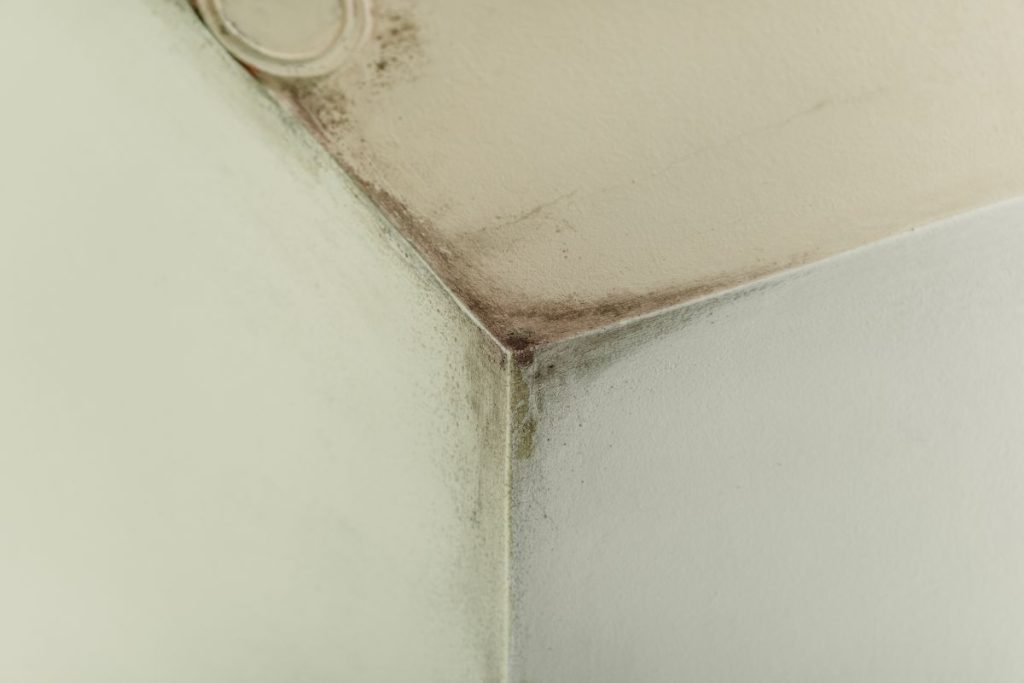
Water marks spread across your condo ceiling and then it starts to drip. The first question most owners ask is simple: who has to fix this, me or the management? In a Singapore strata development the answer depends entirely on where the water comes from. A ceiling dripping condo problem can sit with the MCST, with the owner of the unit above you, or with you. This guide explains how that line is drawn, who to notify first, and the steps that move a leak from finger-pointing to a real repair.
Quick answer: it depends on the source
Here is the short version. If the water comes from common property, the MCST is responsible. If it comes from inside a private unit, the owner is responsible, and with a dripping ceiling that owner is very often the one living directly above you. So before you argue with anyone, you need to know where the water starts.
A wet patch on your ceiling almost always means water is travelling down through the concrete slab from above. The slab is the floor of your upstairs neighbour and the ceiling of your unit at the same time. That shared boundary is exactly why these cases get messy and why responsibility hangs on the source, not on whose ceiling happens to show the stain. If you want the wider picture first, read our pillar guide on why your ceiling is leaking.
Common property vs your private lot
Every condo is split into two kinds of space. Your private lot is what you own and maintain. Common property is shared and maintained by the MCST through your monthly contributions. The leak responsibility follows that split.
What is usually common property
- The main roof and roof waterproofing membrane over the top floor.
- External facade walls and the building envelope.
- Common service pipes, risers, and drainage that serve more than one unit.
- Planter boxes, gutters, and external box-ups that the development controls.
- Common corridors, lift lobbies, and the structure above them.
What is usually your private lot
- Floor and wall finishes inside your unit, such as tiles, screed, and waterproofing in your own bathrooms and balcony.
- Pipes and fittings that serve only your unit, like your toilet, sink, and water heater connections.
- Internal partition walls and ceiling finishes inside your boundary.
- Anything you renovated or altered inside your lot.
The grey zone is the structural slab between two units. The concrete itself is often treated as common property, while the waterproofing and finishes laid on top of it inside the upstairs bathroom belong to that upstairs owner. This is why an inter-floor leak gets pinned on the upper unit so often: the failed waterproofing usually sits inside that owner’s private bathroom, even though the water shows up on your ceiling.
The inter-floor leak situation in condos
An inter-floor leak is the classic condo ceiling leak: water moving from an upper unit into the unit below. In most cases the cause is failed waterproofing in the upstairs wet area, a leaking pipe inside the upstairs floor, or grout and seal failures around the upstairs toilet or floor trap. The lower owner sees the damage. The upper owner controls the source.
The role of the managing agent
The managing agent runs the development on behalf of the MCST. When you report a ceiling leak, the managing agent should log it, check whether common property is involved, and help coordinate access between the two units. The managing agent does not automatically pay for a leak that turns out to come from a private unit, but they are the right party to start the process and to bring both owners to the table.
The legal backdrop, at a high level
Strata living in Singapore sits under the Building Maintenance and Strata Management Act, often shortened to BMSMA. At a general level, the framework sets out that the MCST maintains common property while owners maintain their own lots, and it gives owners a path to resolve inter-floor leak disputes when the two sides cannot agree. Treat this as background only. The exact obligations in your case depend on your development and the specific facts, so confirm details with your managing agent or a qualified advisor rather than relying on a general summary.
Mediation and the Strata Titles Board
Most inter-floor leaks are settled between the two owners with the managing agent helping. If that fails, mediation is the next step, and the Strata Titles Board is the formal route used as a last resort when owners still cannot agree on the cause or the cost. Going that far takes time and effort, which is the main reason a clear, independent diagnosis early on saves so much trouble.
Responsibility table: who is likely on the hook
Use this as a quick guide. The likely party can shift once an inspection confirms the true source, so treat it as a starting point, not a verdict.
| Leak source | Likely responsible party | Who to notify first |
| Failed waterproofing in the upstairs bathroom or kitchen | Owner of the unit above | Managing agent and the upstairs owner |
| Leaking private pipe inside the upstairs floor | Owner of the unit above | Managing agent and the upstairs owner |
| Main roof or roof membrane failure (top-floor units) | MCST | Managing agent |
| External facade wall letting water in | MCST | Managing agent |
| Common service pipe or riser in the slab or shaft | MCST | Managing agent |
| Common planter box or external box-up | MCST | Managing agent |
| Failed waterproofing in your own bathroom above a void or your own ceiling | You, the owner | Your own contractor |
What to do when your condo ceiling drips
Acting in the right order protects both your home and your position if the case turns into a dispute. Follow these steps.
- Make the area safe. Move furniture and electronics, place a bucket, and switch off the affected light or power point if water is near electrical fittings.
- Notify the MCST or managing agent in writing. A short email or message creates a dated record and starts the official process. Note the date the dripping began.
- Tell the upstairs owner. Many ceiling leaks come from the unit above, so an early, polite heads-up gives them a chance to check their bathroom and floor.
- Document everything. Photograph the stain, the drip, and any damaged finishes. Keep adding dated photos as the patch grows or dries, since this shows the pattern over time.
- Get an independent leak inspection report. Bring in a specialist who can trace the source with proper testing and put the finding in writing.
- Share the report with the managing agent and the responsible owner. A clear diagnosis moves the conversation from blame to a fix.
If you are unsure who to approach across HDB, condo, and landed setups, our guide on who to call for a ceiling leak walks through each one. For condos, the managing agent is almost always your first call.
Why an independent inspection report matters
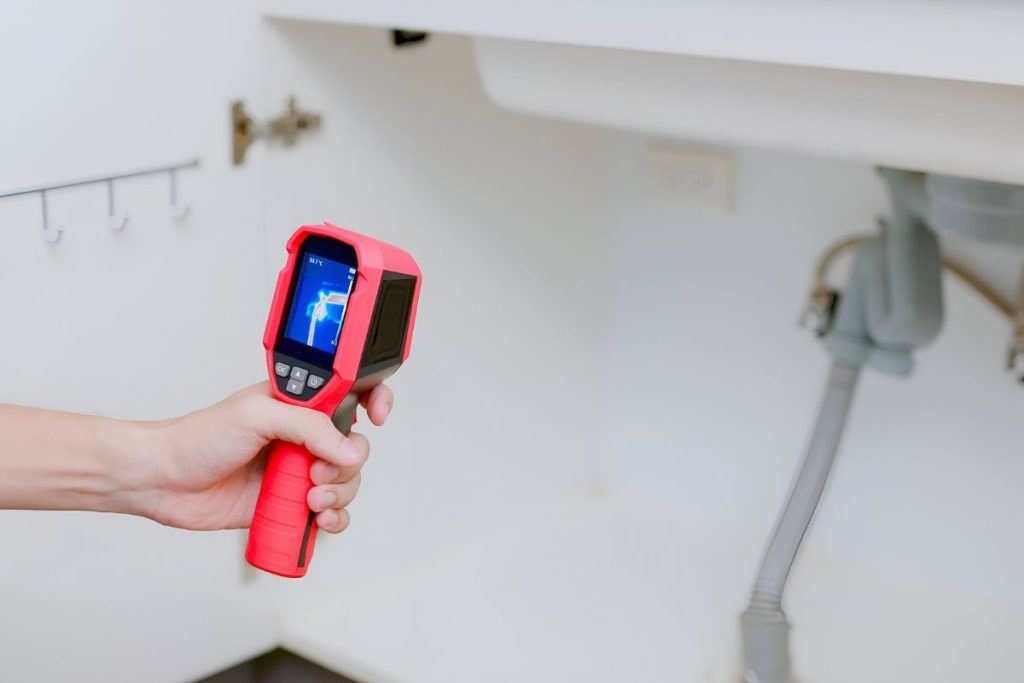
When two owners disagree, the argument usually comes down to one question: where does the water actually come from? An independent inspection answers it with evidence instead of opinion. A specialist can use moisture meters, dye or water ponding tests, and a check of the pipe routes to pin down the source and rule out the easy assumptions.
A written report carries weight that a verbal claim never will. It gives the managing agent something concrete to act on, it tells the responsible owner exactly what needs fixing, and if the matter ever reaches mediation or the Strata Titles Board, it is the kind of documentation that helps your case. Because the inspector has no stake in who pays, both sides tend to trust the finding more than a quote from a contractor one party hired.
How the repair is done once responsibility is settled
Once the source is confirmed and the responsible party agrees to act, the fix targets the cause first and the cosmetic damage second. Patching your ceiling without stopping the source just buys a few dry weeks before the stain returns.
For the common inter-floor case from an upstairs bathroom, the work usually means exposing and repairing the failed waterproofing or pipe in the upper unit, then re-waterproofing and reinstating the floor finish. After the source is dry, the lower unit ceiling is treated for moisture, the damaged plaster or board is made good, and the ceiling is repainted. For a roof or facade source, the MCST’s contractor handles the membrane or external repair before any internal patching makes sense. You can see the internal side of this work on our Ceiling Leak Repair service page.
Cost note (indicative SGD)
Figures here are indicative SGD ranges only and depend on the source, access, and the extent of damage. An independent leak inspection and report typically falls in a few hundred dollars, and Roof Doctors offers a free inspection for ceiling leaks. Stopping the source, such as re-waterproofing an upstairs wet area, usually runs into the low four figures depending on the area and finishes. Cosmetic ceiling reinstatement and repainting is generally a smaller add-on once the leak is dry. Where the MCST is the responsible party for a common-property source, that cost is borne by the development rather than by you directly.
Frequently Asked Questions
Is a condo ceiling leak the MCST’s responsibility?
Only when the water comes from common property, such as the main roof, an external facade wall, or a common service pipe. If the source is inside a private unit, usually the bathroom of the unit above you, the owner of that unit is responsible, not the MCST. An inspection confirms which one it is.
My upstairs neighbour denies the leak. What now?
Report it in writing to the managing agent and ask them to coordinate access for an inspection. Get an independent leak inspection report that traces the source. A neutral, written diagnosis is hard to argue with, and if the neighbour still refuses to act, the report supports moving to mediation or the Strata Titles Board.
Who pays for the repair?
The party responsible for the source pays. If it is the upstairs unit, that owner pays to stop the leak. If it is common property, the MCST pays. Your own insurance or the responsible owner may cover the cosmetic damage to your ceiling, so check your policy and keep all your documentation.
Do I need a leak detection report?
It is strongly recommended for condo cases. Once two owners disagree, you need evidence of where the water comes from, and a written report from an independent specialist gives you exactly that. It speeds up the repair and protects you if the matter escalates.
Can the MCST force the upstairs owner to fix it?
The MCST and managing agent can require owners to maintain their lots and can use the dispute process under the strata framework when an owner refuses. The exact steps depend on your development and the facts, so the managing agent is the right party to drive it. A clear inspection report makes their job far easier.
How long does resolution take?
A straightforward case where the upstairs owner cooperates can be diagnosed and repaired within a few weeks. Disputes that go through mediation or the Strata Titles Board take longer, sometimes months. Getting an independent report early is the single best way to keep the timeline short.