

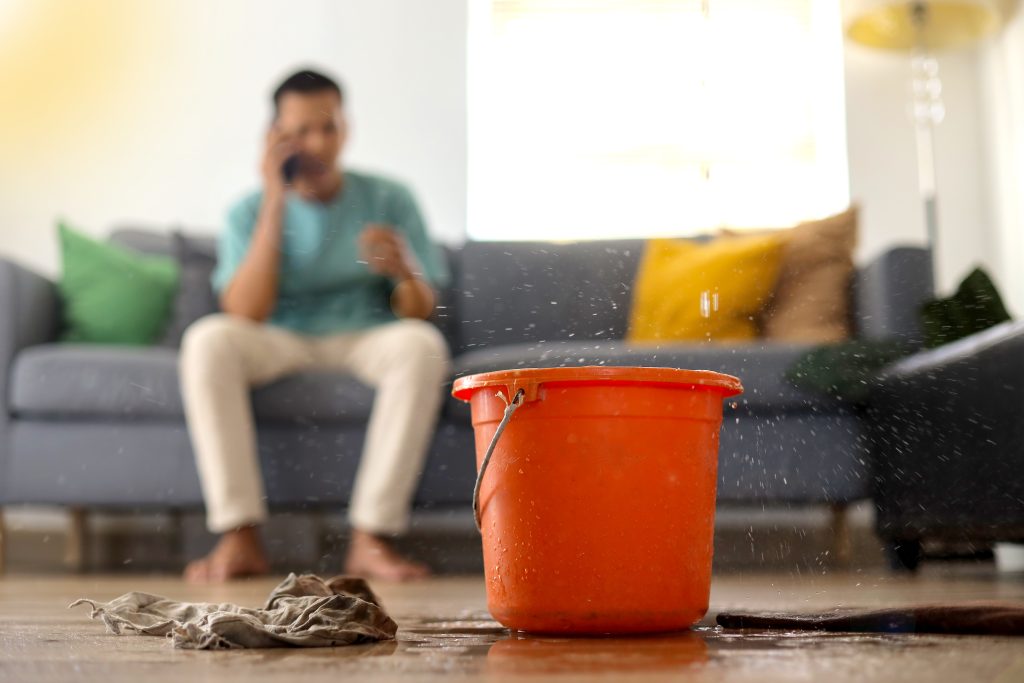
If you’re reading this with a bucket on the floor, you’re not overreacting. A ceiling dripping water is stressful, and the first two questions every homeowner asks are the same: why is my ceiling leaking, and who do I call? In Singapore, ceiling leaks almost always follow one of two patterns – dripping that only happens after rain, or dripping that never stops regardless of the weather. These are not the same problem. They point to different causes, need different specialists, and carry different levels of urgency. This guide helps you identify which situation you’re dealing with, what to do right now, and who to call for a leak in your ceiling – without the guesswork.
Why Is My Ceiling Leaking: Identifying the Pattern of Your Drip
Before calling anyone, take two minutes to observe. The pattern of the drip is the fastest way to narrow down the cause and avoid calling the wrong contractor.
Questions to Ask Yourself First
Run through these before picking up the phone:
- Does the ceiling drip only during or after heavy rain, or does it happen on dry days too?
- Has the dripping gotten worse recently, or has it been steady?
- Is the water clear, yellowish, or rust-coloured?
- Is the wet patch near a bathroom, balcony, air-con unit, or external wall?
These details matter more than they might seem. Ceiling leaks rarely originate directly above the wet spot. Water travels along concrete slabs, beams, and embedded pipes before appearing as a drip — sometimes metres away from the actual source.
Why Getting the Pattern Right Saves You Money
Calling the wrong professional first is the single most common and most expensive mistake homeowners make with ceiling leaks. A plumber cannot fix a waterproofing failure. A waterproofing contractor cannot fix a burst pipe. Getting the diagnosis right the first time means paying once, not twice.
Rain-Related Ceiling Dripping: Roof Damage or Waterproofing Failure
If your ceiling only drips during or shortly after rain and stops once the weather clears, the problem is almost certainly external.
Common Causes of Rain-Related Ceiling Leaks
The most frequent culprits in Singapore landed homes and condominiums are deteriorated roof waterproofing membranes, hairline cracks in concrete roof slabs, blocked or overflowing gutters, and failed flashing around roof joints or parapets. These defects are often invisible from inside the home — water finds a path through a gap no wider than a hair, saturates the slab, and eventually appears as a drip below.
Why You Shouldn’t Wait It Out
The leak disappearing after rain stops is not a sign that the problem is minor. Repeated wetting and drying accelerates concrete deterioration, corrodes embedded steel reinforcement, and gradually widens the entry point for water. The ceiling stain you’re looking at today is the early warning of structural damage if left unaddressed.
Who to Call for Rain-Related Ceiling Leaks
A roof and waterproofing specialist — not a plumber. The source is external, and resolving it requires waterproofing assessment and repair at roof level, not internal patching.
Constant Dripping: Waterproofing Failure or Plumbing Issue
If the ceiling is dripping continuously — even on days when it hasn’t rained — water is coming from somewhere inside the building. This is more urgent than a rain-related leak.
Common Causes of Constant Ceiling Dripping
Typical sources include failed waterproofing in a bathroom or balcony on the floor above, leaking water supply pipes, damaged drainage pipes embedded in the concrete slab, or long-term seepage that has fully saturated the ceiling structure.
How to Tell the Difference Between Plumbing and Waterproofing
Pay attention to when the dripping worsens. If it gets worse when taps are turned on, showers are running, or toilets are flushed in the unit above, a plumbing issue is the likely cause. If the dripping is steady regardless of water usage, waterproofing failure is more probable. In some cases, both are present — a leaking pipe has compromised the waterproofing membrane over time.
The Risks of Ignoring Constant Dripping
Continuous moisture inside a ceiling cavity creates conditions for mould growth, can damage electrical wiring, weakens the concrete structure, and causes persistent damp odours. This is not a situation to monitor. It needs a professional assessment promptly.
Air-Con Condensation: The Ceiling Dripping Cause Most Homeowners Miss
Not every ceiling drip comes from rain or pipes. In Singapore’s climate, air-conditioner condensation is a more common source of ceiling dripping than most homeowners expect — particularly in condominiums.
Why Air-Con Units Cause Ceiling Leaks
When air-con drainage pipes become clogged or disconnected, condensation trays overflow, insulation around the piping degrades, or installation is incorrect, condensate water backs up and drips into the ceiling cavity. Over time it saturates the slab and appears as a ceiling leak.
Signs Your Ceiling Leak Is Air-Con Related
The dripping happens when the air conditioning is running and eases when it’s switched off. The affected area is near bedrooms or living spaces where air-con units are installed, and the water is clear and odourless with no rain correlation.
What to Do About Air-Con Ceiling Leaks
An air-con technician can often clear the drainage issue quickly. However, if condensation has already soaked into the concrete slab over an extended period, waterproofing repairs may still be needed after the air-con issue is resolved.
Who to Call for a Leak in the Ceiling: Matching the Right Specialist
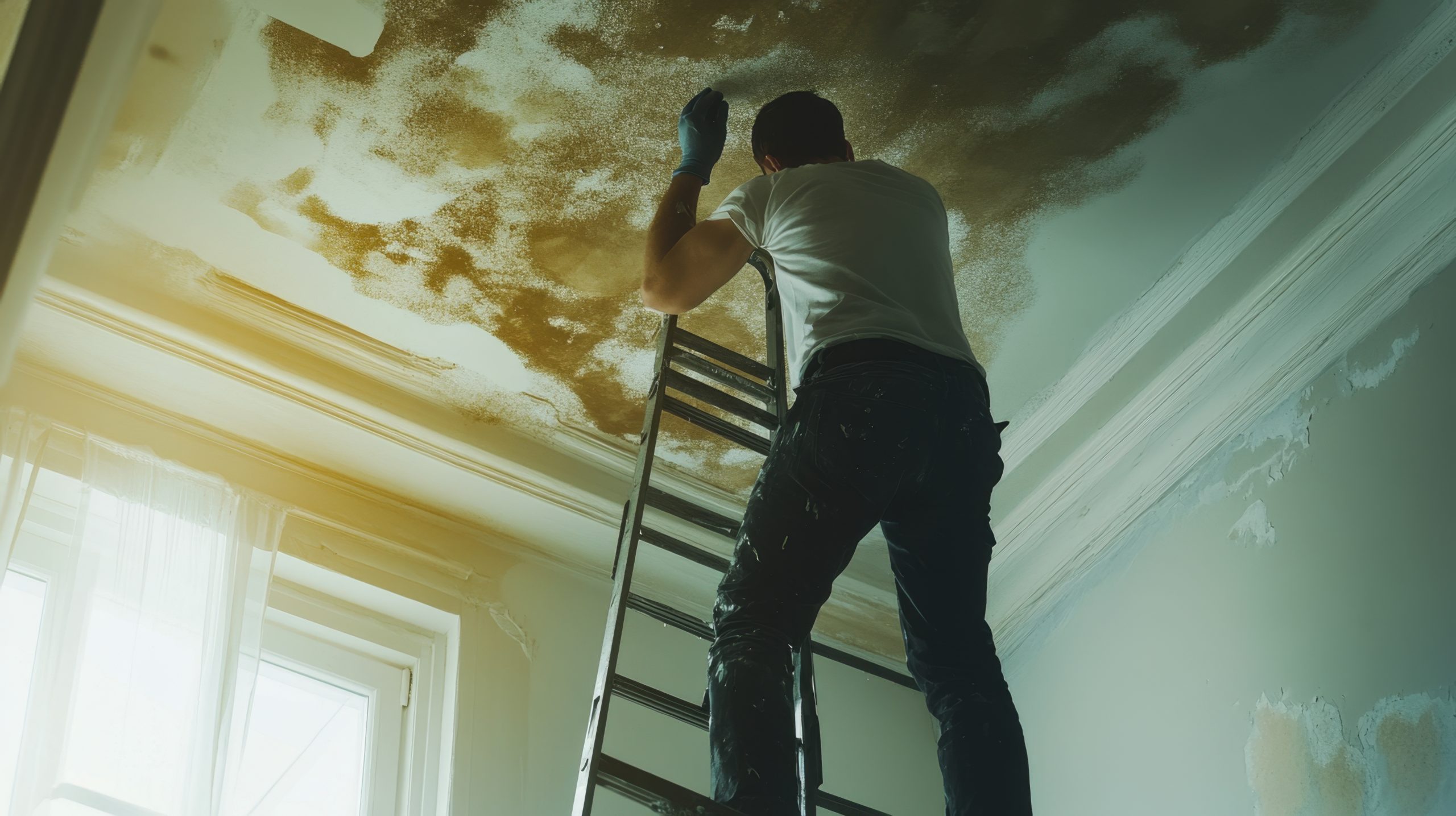
Once you’ve identified the pattern, matching it to the right professional is straightforward.
Choosing the Right Contractor by Leak Type
Ceiling dripping only after rain — call a roof and waterproofing specialist. The source is external and requires inspection and repair at roof or façade level.
Constant dripping unrelated to rain — call a waterproofing specialist first. If the dripping clearly worsens with water usage in the unit above, a plumber should assess simultaneously.
Dripping occurs when air-con is running — call an air-con technician first, then follow up with a waterproofing contractor if slab saturation is suspected.
Bathroom or balcony directly above the wet patch — call a waterproofing contractor. This is almost always a waterproofing membrane failure, not a plumbing issue.
Why Ceiling Leaks Need Specialist Diagnosis, Not Patchwork
Ceiling leaks are rarely surface problems. Water that appears as a drip inside your home may have been travelling through the structure for weeks or months before becoming visible. Proper repair requires testing to locate the actual source, not just treating the symptom. Be cautious of any contractor who quotes a fix without carrying out an inspection first.
Please note: Roof Doctors services are available for condominiums and landed properties only. HDB properties are not currently serviced.
What to Do Immediately When Your Ceiling Is Dripping
While waiting for a professional assessment, these steps will limit the damage.
Immediate Steps to Take
Place a container to catch the dripping water and protect your flooring. Move furniture, electronics, and valuables away from the affected area. Take photos and short video clips of the leak — these are useful for the contractor’s diagnosis and for any insurance or MCST documentation you may need later. Note the time the dripping starts and stops, and whether it correlates with rain or air-con use.
What Not to Do
Do not poke, drill, or hack the ceiling to investigate the source yourself, and do not attempt DIY sealing from inside with silicone or waterproofing paint. Internal patching almost never addresses the actual source and can make proper repairs more complicated and costly later.
Cost of Ceiling Leak Repair in Singapore
The cost of ceiling leakage repair varies significantly because the cause matters far more than the visible symptom.
What Affects the Price
Factors that influence the final cost include the source of the leak, the accessibility of the affected area, the extent of moisture damage and saturation in the slab, and whether hacking and reinstatement of tiles or finishes is required. A straightforward air-con drainage fix costs very little. Waterproofing membrane replacement in a bathroom above, combined with ceiling reinstatement below, is a more involved scope.
Why Cheap Quotes Without Inspection Are a Red Flag
Any contractor who provides a repair quote without first inspecting and diagnosing the source is guessing. Guesswork repairs fail — and you end up paying again. Proper diagnosis always precedes a credible quote.
Frequently Asked Questions
Why is my ceiling leaking after rain?
Rain is entering through a defect in your roof or external waterproofing. Common entry points are deteriorated waterproofing membranes, hairline cracks in the roof slab, blocked gutters, or failed flashing around joints and parapets. Even a very small defect is enough to allow water in during sustained rainfall.
Is a dripping ceiling an emergency?
Constant dripping is — rain-related dripping is urgent but slightly less so. If water is dripping continuously, it means a live water source is involved, and the longer it runs the more damage accumulates inside the ceiling cavity. Both situations need professional attention promptly, but continuous dripping should not be left overnight without at least taking protective measures.
Who is responsible for fixing a ceiling leak in an HDB flat?
It depends on where the leak originates. If the source is in the unit directly above, the owner of that unit is typically responsible for repairs. HDB provides specific guidelines on leak responsibility between neighbours, and the Town Council may be involved if common property is the source.
Note: Roof Doctors does not service HDB properties. This answer is provided for informational purposes.
How much does ceiling leak repair cost in Singapore?
It depends on the source and scope of the repair. Minor issues like an air-con drainage blockage can cost very little to fix. Waterproofing membrane replacement combined with ceiling reinstatement is a more significant investment.
Can a ceiling leak cause mould or health issues?
Yes, and quickly. Persistent moisture inside a ceiling cavity creates ideal conditions for mould growth, which can cause respiratory irritation, allergies, and ongoing indoor air quality problems. If you can already smell dampness or see dark patches forming near the wet area, the leak has likely been active longer than it appears. Getting it fixed promptly is a health issue, not just a property issue.
How do I temporarily stop a ceiling from dripping?
You can’t fully stop it, but you can limit the damage. Place containers to catch water, move valuables away from the area, and avoid touching or poking the ceiling. Do not apply DIY sealant from inside — it traps moisture in the slab and makes proper repairs harder later. The only real fix is identifying and repairing the source.
Don’t Guess — Get It Diagnosed Properly
If you’re asking why your ceiling is leaking, you’re already doing the right thing by looking for answers early. Rain-related ceiling dripping and constant dripping are not the same problem, they don’t have the same cause, and they don’t need the same fix.
The right diagnosis from a qualified specialist is what separates a permanent repair from a temporary patch that fails in three months. For condo and landed property owners in Singapore, ceiling leakage repair is an investment in your home’s structural health — not just a cosmetic fix. If the dripping has started, don’t wait for it to get worse.