

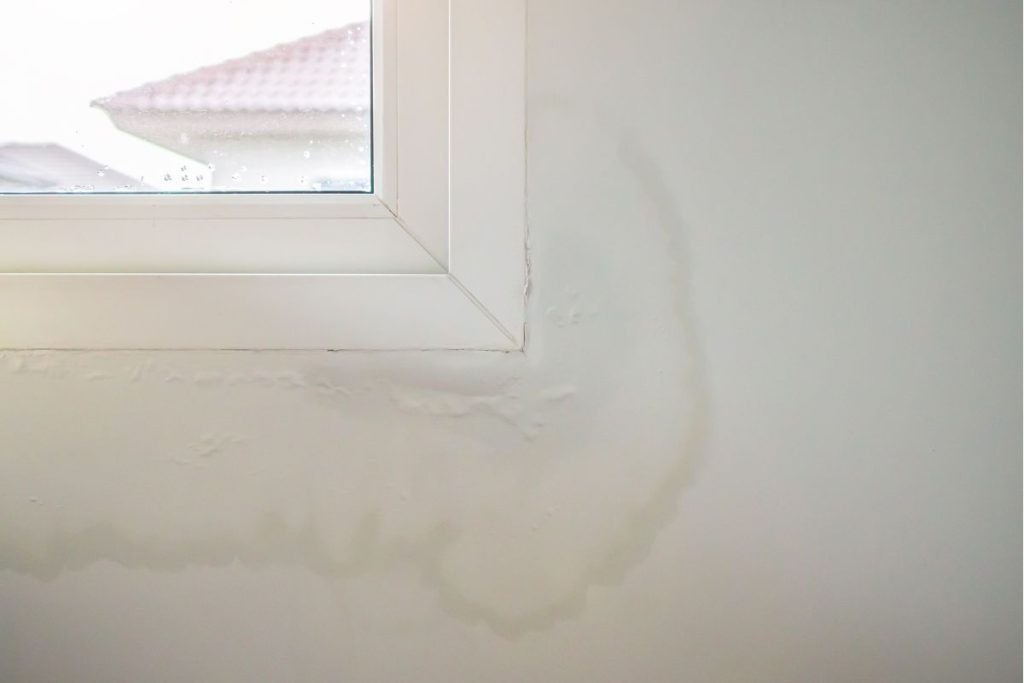
Water leakage from a wall almost always starts in one of two places: inside the building, from a pipe or a wet area, or outside, from rain pushing through the facade. The patch you see indoors rarely sits over the real entry point, so the first job is to work out which side the water comes from. Get that right and the repair holds. Get it wrong and the stain comes back after the next heavy month. This guide walks through the clues that point inward, the clues that point outward, the checks you can run yourself, and how a contractor confirms the source before any work begins.
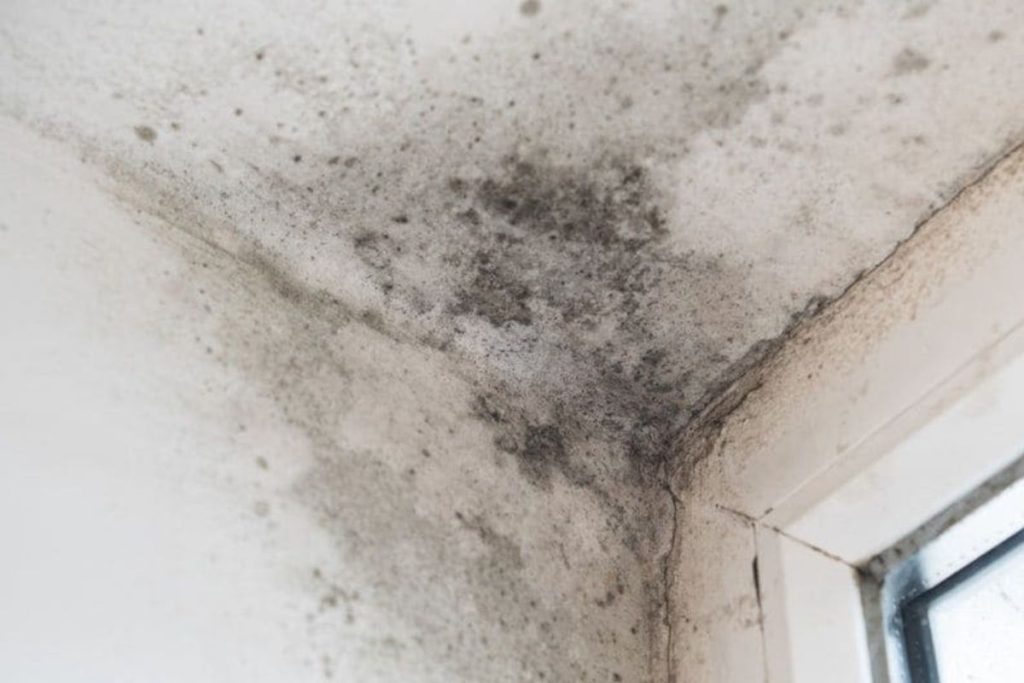
Why pinpointing the source matters
A damp wall is a symptom. The water reached that spot from somewhere else and tracked along plaster, screed, or a hairline crack until it surfaced. If a contractor treats the visible stain without finding the entry point, the coating may look fine for a few weeks, then the patch returns in the same place or shifts a metre away.
The cost of a wrong diagnosis is real. Repainting an internal wall when the water is actually coming through the external render wastes the paint and the labour. Hacking open a bathroom wall when the problem is a leaking pipe in the next unit means damage to a wall that was never the cause. Sorting internal from external first tells you who fixes it, where the work happens, and roughly what it costs. For the wider picture of why walls leak in the first place, see our full guide to water seepage in walls.
Signs that point to an external source
External leaks come from rain. Water sits against the outside face of the wall during a storm, finds a crack or a tired coating, and works its way through. The timing and the location usually give it away.
- The damp gets worse during or right after heavy rain, then slowly dries between storms.
- The patch sits high on the wall or near the ceiling line, where wind-driven rain hits hardest.
- It shows up on an outward-facing wall, an external corner, or a wall under a window or parapet.
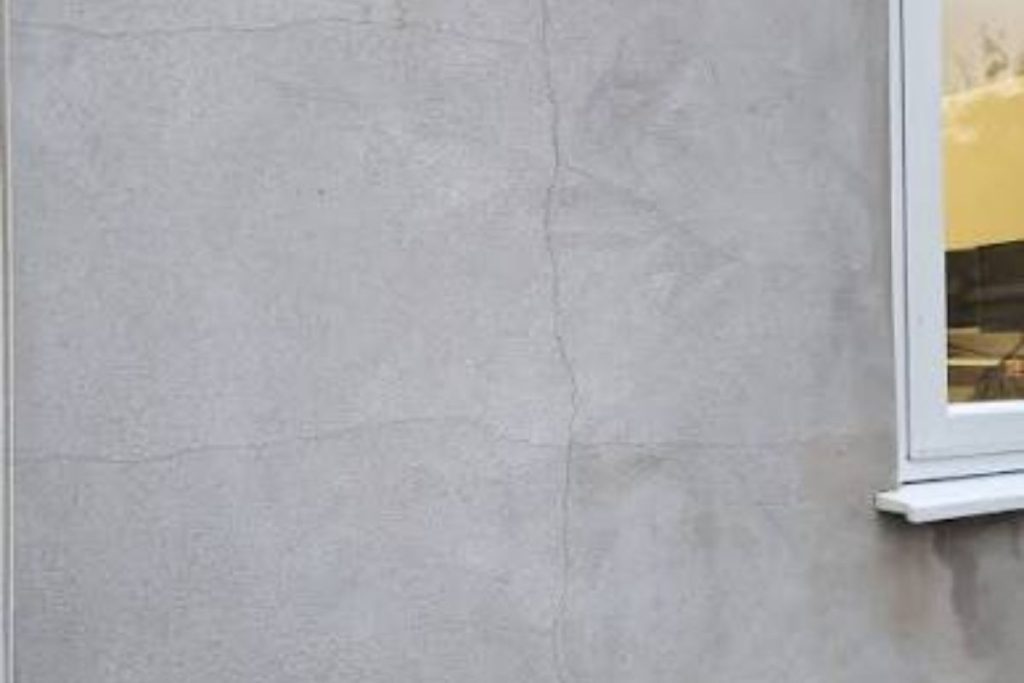
- You can see cracks, flaking paint, or open joints on the facade outside, lined up with the indoor stain.
- Several units stacked above each other show damp in the same vertical line, pointing to a shared external face.
Weather is the strongest single clue. A wall that only weeps after a monsoon downpour and stays dry through a dry week is telling you the water arrives from outside.
Signs that point to an internal source
Internal leaks come from water already inside the building, usually a pipe or a wet area. This water runs whether the sky is clear or not, so the pattern looks different from a rain leak.
- The damp stays constant regardless of the weather, and may even get worse on a dry, sunny day.
- The wet area sits next to a bathroom, kitchen, laundry zone, or a wall that carries concealed pipes.
- The stain appears low on the wall or near floor level, where wet-area waterproofing tends to fail.
- A party wall shared with a neighbour stays damp, hinting at a leak in their unit, not yours.
- Water use changes the pattern: the patch grows after a long shower or a full load of laundry.
A plumbing leak in a wall often hides for a while because the pipe drips slowly behind plaster. If your water bill creeps up with no clear reason, or you hear a faint trickle inside a wall when every tap is off, treat it as a strong internal signal.
Internal vs external: a side-by-side table
Use this table to read your own wall. No single clue is conclusive on its own, so look for the side that collects the most matches.
| Clue | Likely internal | Likely external |
| Timing | Constant, ignores the weather | Worse during or after rain |
| Height on wall | Low, near skirting or floor | High, near ceiling or window head |
| Wall type | Next to bathroom, kitchen, or pipes | Outward-facing or external corner |
| Dry-day behaviour | Stays wet or worsens | Slowly dries out |
| Trigger | Tracks shower, laundry, or tap use | Tracks rainfall |
| Outside view | Facade looks sound | Cracks, flaking, or open joints visible |
| Neighbour link | Shared party wall stays damp | Stacked units leak in one vertical line |
Common internal causes
Plumbing leaks behind the wall
Concealed water pipes run inside walls in most Singapore homes. A loose joint, a corroded section, or a pinhole leak releases water that the plaster soaks up. These leaks run day and night, which is why an internal stain often refuses to dry.
Failed wet-area waterproofing
Bathrooms, kitchens, and balconies sit on a waterproofing membrane under the tiles. Over years the membrane cracks, or the grout opens up, and water from the floor pushes sideways into the adjoining wall. The damp usually surfaces on the other side of a wet-area wall, low down.
Condensation
In a humid climate, cool surfaces collect moisture from the air. A wall behind a wardrobe, or one chilled by an air-conditioner running against it, can stay damp without any leak at all. Condensation shows as a broad, even film of moisture rather than a single tracking stain.
Common external causes
Cracked render and open joints
The cement render on the outside face takes the full force of sun and rain. It develops hairline cracks over time, and rain drives straight into them. On older blocks, mortar joints between bricks or blocks open up and act as a direct path inward.
Failed exterior coating
Exterior paint and waterproof coatings are the wall’s raincoat. Once they chalk, peel, or wear thin, the wall behind them drinks in rainwater. Sound external wall waterproofing in Singapore is what keeps monsoon rain from reaching the inner leaf of the wall.
Parapet and window seal failure
Parapet walls on the roof edge and the sealant around window frames are common weak points. A cracked parapet coping lets water run down inside the wall, and a perished window seal lets rain enter right at the frame. Both produce damp that lines up with the feature outside.
How professionals confirm the source
Reading the clues narrows the field. Confirming the exact entry point takes equipment and method. Here is how our crews settle it before quoting any repair.
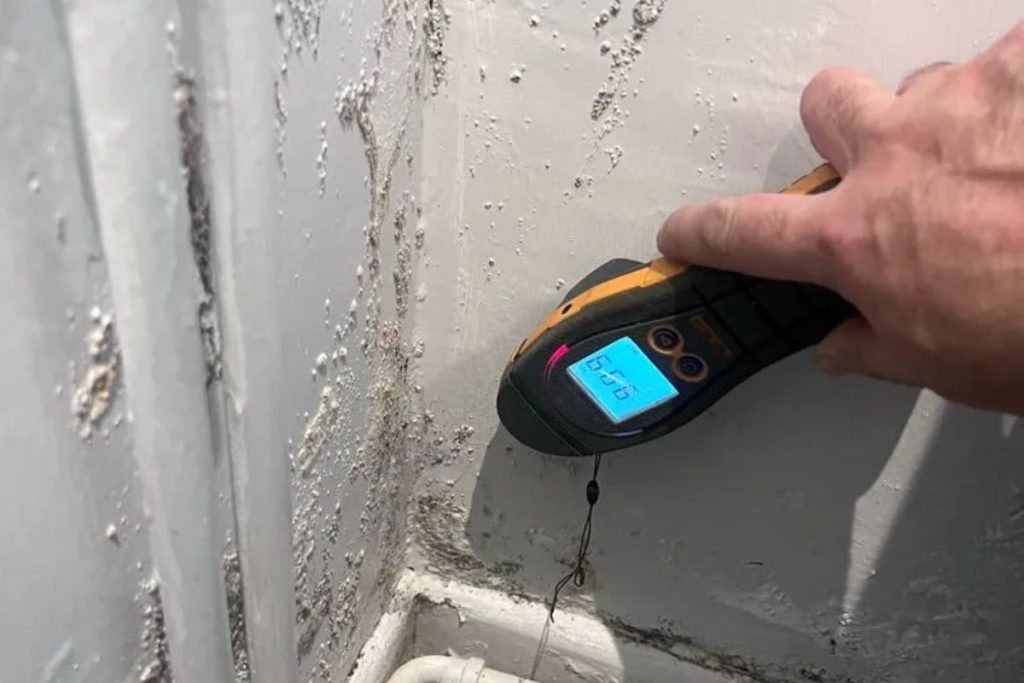
- Moisture mapping: a moisture meter is run across the wall in a grid to chart where readings peak, which traces the water back toward its origin.
- Thermal imaging: a thermal camera shows cool, wet zones behind the surface that the eye cannot see, revealing the path the water takes.
- Targeted water testing: we wet a specific outside zone, a window seal, or a balcony floor, then watch the inside to confirm whether that source produces the leak.
- Checking the other side of the wall: we inspect the bathroom, the neighbour’s unit, or the external face directly behind the stain, since the real fault almost always sits there.
Combining these steps removes the guesswork. We only open up a wall once the evidence points to one source, which keeps the repair focused and the cost down.
Simple checks you can do first
You can gather useful evidence before anyone visits. None of these checks need tools beyond your phone and a dry cloth.
- Track the weather. Note whether the damp grows during rain or stays the same on dry days. A week of notes tells a clear story.
- Wipe and watch. Dry the patch fully, then check it morning and night. A patch that returns on a dry day points inward.
- Feel the temperature. A cold, evenly damp wall behind a cupboard or beside an air-conditioner suggests condensation, not a leak.
- Read the water meter. Turn off every tap and appliance, note the meter, and check again after an hour. Movement points to a hidden pipe leak.
- Look outside. Photograph the external face directly behind the stain and check for cracks, flaking paint, or gaps near windows and the parapet.
- Ask the neighbour. If the damp is on a shared wall, a quick word can reveal a wet area or a leak on their side.
What the fix looks like for each type
The source decides the repair. An internal plumbing leak means opening the wall, replacing the faulty pipe section, and reinstating the finish. Failed wet-area waterproofing means stripping the affected tiles, laying a new membrane, and retiling. An external leak means working on the outside face: cutting out and resealing cracks, recoating the render, or renewing parapet and window seals so rain stops getting in.
Some damp only needs a fresh waterproof coat, while deeper faults need structural repair. We cover that call in detail in our guide on whether to repaint or do a structural fix. Because the scope swings so widely between a reseal and a full membrane replacement, the price does too. Our breakdown of wall seepage repair cost sets out the indicative SGD ranges so you know what to expect. When you are ready to fix it, our Wall Seepage Repair service handles both the diagnosis and the repair under one warranty.
Frequently Asked Questions
How do I know if my wall leak is internal or external?
Watch the timing and the location. A leak that worsens with rain, sits high on an outward-facing wall, and lines up with cracks outside is external. A leak that stays constant in any weather, sits low, and sits next to a bathroom, kitchen, or concealed pipe is internal. If the clues split, a moisture survey settles it.
Why is my wall wet only after rain?
Damp that appears only after rain and dries between storms points to an external source. Rain is pushing through a crack in the render, a worn exterior coating, or a failed seal around a window or parapet, then tracking inside to the patch you see.
Could my wall leak be a pipe?
Yes. A concealed water pipe that leaks behind the plaster keeps a wall damp day and night, with no link to the weather. Turn off every tap and appliance and check your water meter over an hour. If it still moves, a hidden pipe leak is likely and needs a plumber or waterproofing crew to open the wall.
Can condensation cause damp walls?
It can. In Singapore’s humid air, a cool wall behind a wardrobe or beside an air-conditioner collects moisture from the air without any leak. Condensation shows as a broad, even film of damp rather than a single stain that tracks down from one point. Better airflow and a gap behind furniture usually help.
Do I need a professional to find the source?
For a small, obvious leak you can often find the cause yourself with the checks above. For damp that keeps coming back, sits on a shared wall, or has no clear trigger, a professional with a moisture meter and thermal camera will find the entry point far faster and avoid opening the wrong wall.
How long does a wall leak diagnosis take?
Most inspections take under an hour. We map the moisture, scan with a thermal camera where needed, and run a targeted water test if the source is unclear. You get a clear reading of internal or external and a repair plan on the same visit.